
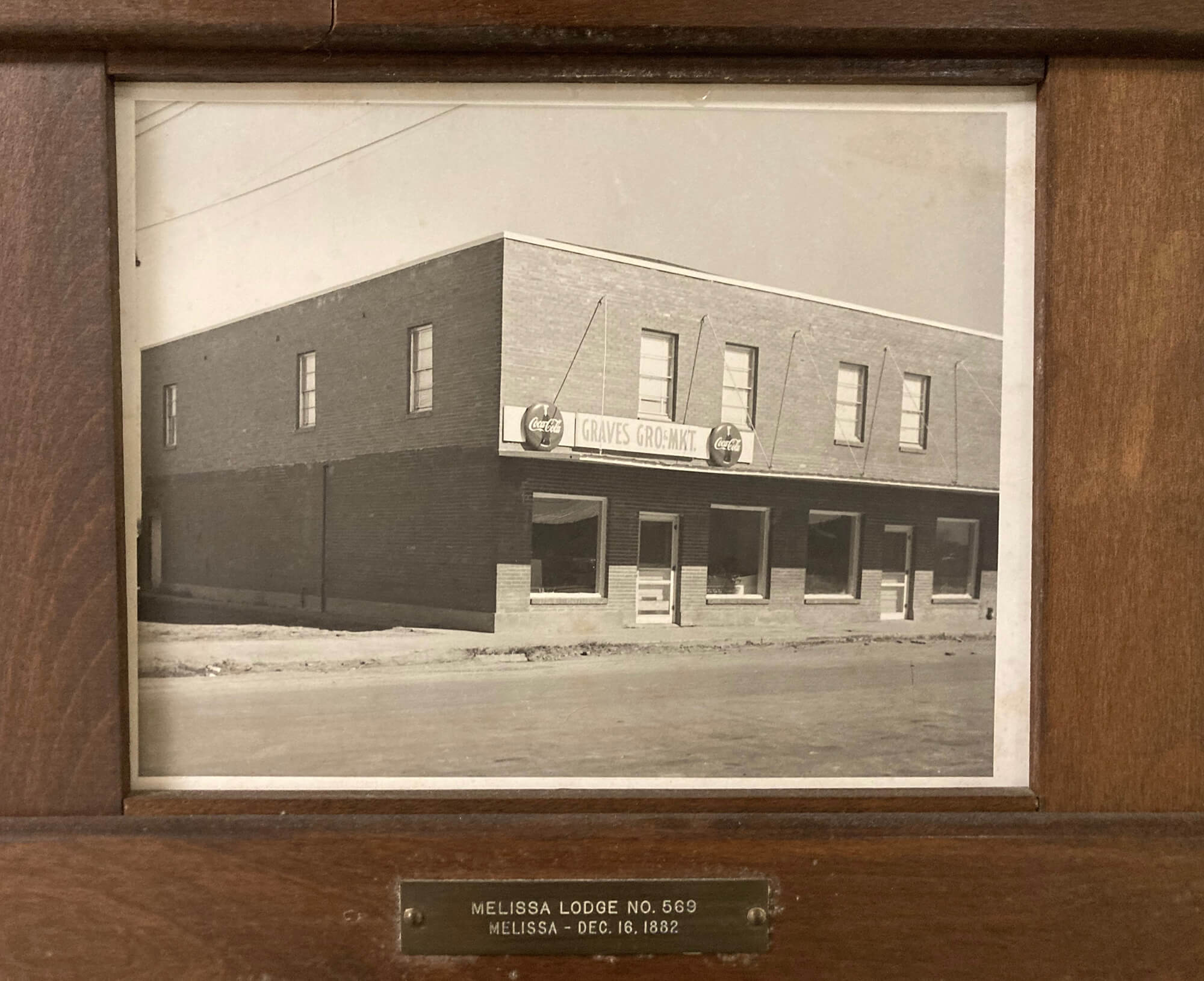
Melissa is located seven miles northeast of McKinney in north central Collin County. The rich soils of the Blackland Prairie and the waters of the Elm Fork of the Trinity River attracted settlers to the area in the 1840s. Some of the first settlers of Melissa came from the old Highland community, which was located two and one half miles north of present day Melissa.
Charles Hopkins Wysong was an influential early pioneer who settled at Highland in 1850.
CH Wysong was a blacksmith, millwright, Bois d’ Arc wagon maker, farmer, Post Master, veteran, and Mason. He was the founder of many of the Masonic Lodges across North Texas, including the Melissa Masonic Lodge in 1882. Wysong’s blacksmith shop served as the Masonic Lodge as well as the Highland Post Office for a time. The location of the first Highland Post Office was at Foster Crossing about 3 miles north of Melissa and Isaac N. Foster became the first Postmaster in 1853. In 1856, Wysong donated land for a church and the now historic Highland Cemetery. Highland also had a gin, grist mill and several houses.
The establishment of Melissa and subsequent disappearance of the community of Highland were results of one of the most pivotal moments in the history of North Texas: the arrival of the Houston & Texas Central Railway. The H&TC Railway reached the area in late 1872, established a railroad depot, and laid out a new town. At this time, many residents of Highland moved closer to the railroad. The post office at Highland closed in 1873.
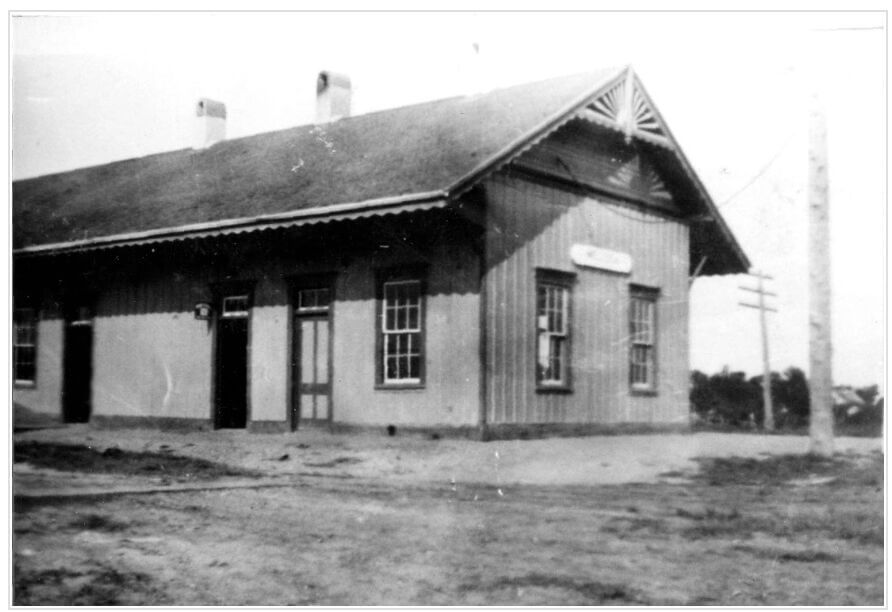
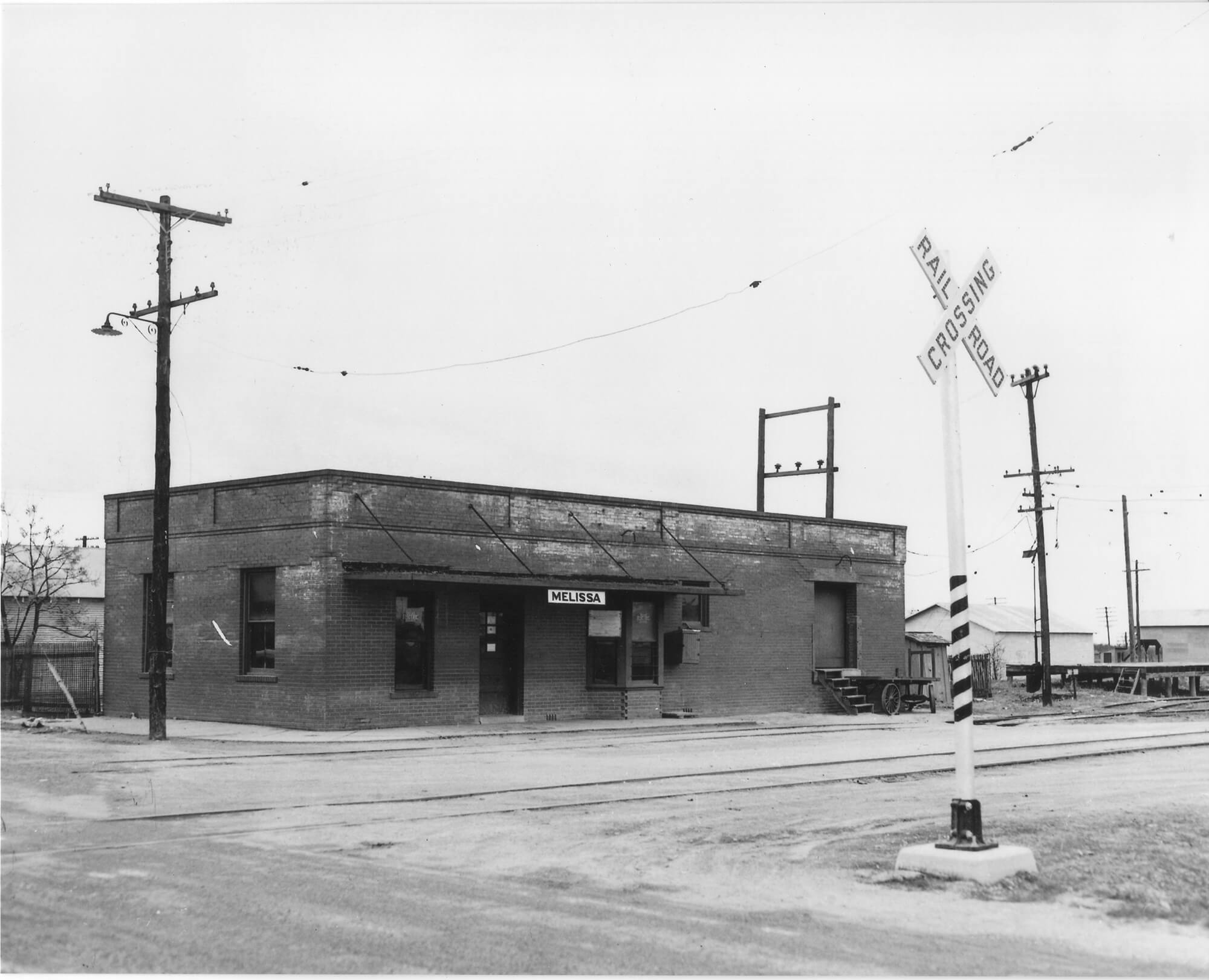
Some sources have claimed that Melissa was named for either the daughter of H&TC Railway official George A. Quinlan or the daughter of Railroad executive C.P. Huntington. However, neither Quinlan nor Huntington had daughters named Melissa. The town of Melissa was most likely named in honor of Melissa Ann (Jackson) Day, mother of Mary Anna “Mollie” Day. Mary was the wife of Lawrence Aylette Daffan, who at the time of their marriage on January 23, 1872, was superintendent of the H&TC Railway, second division.
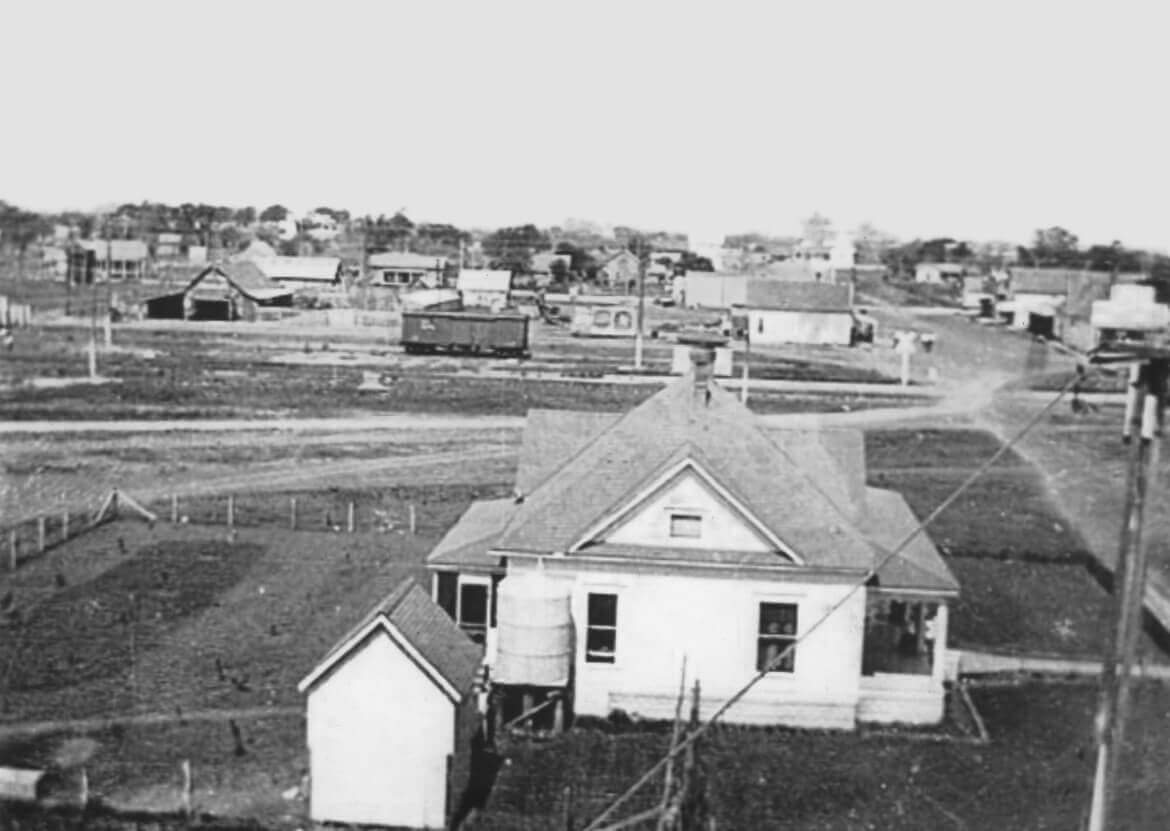
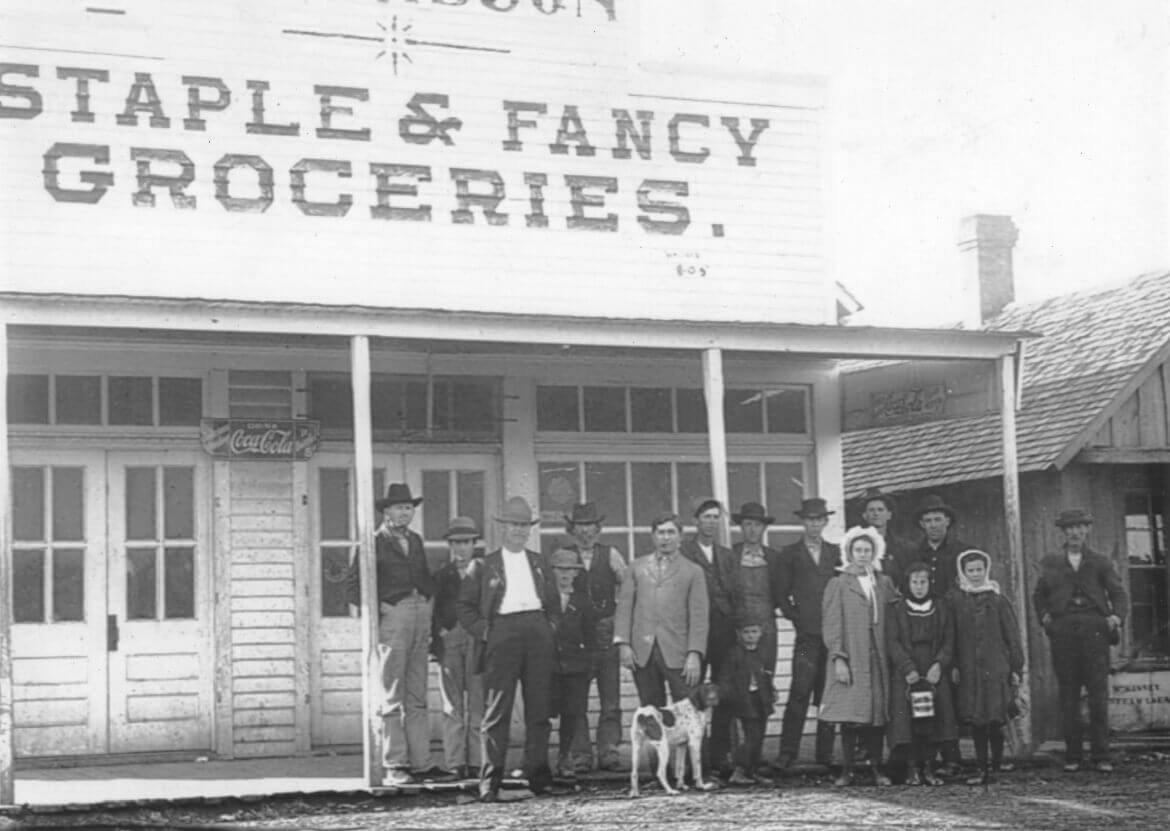
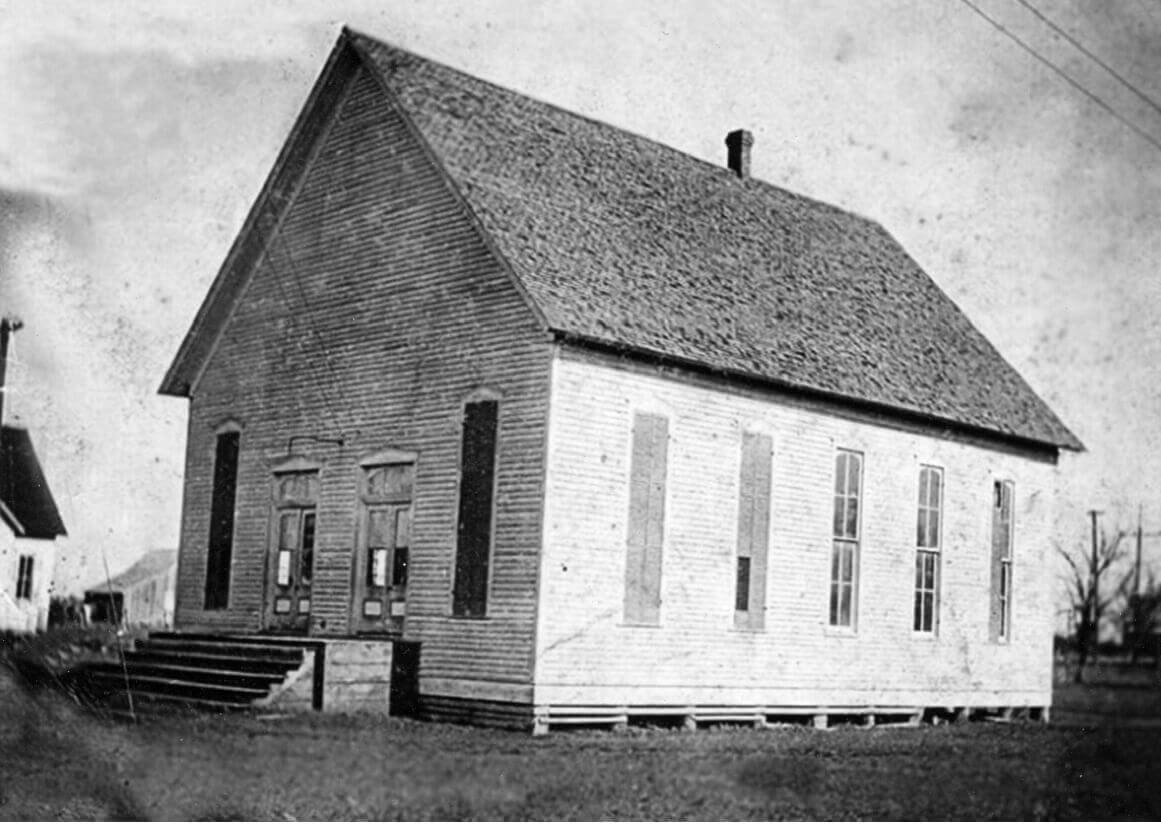
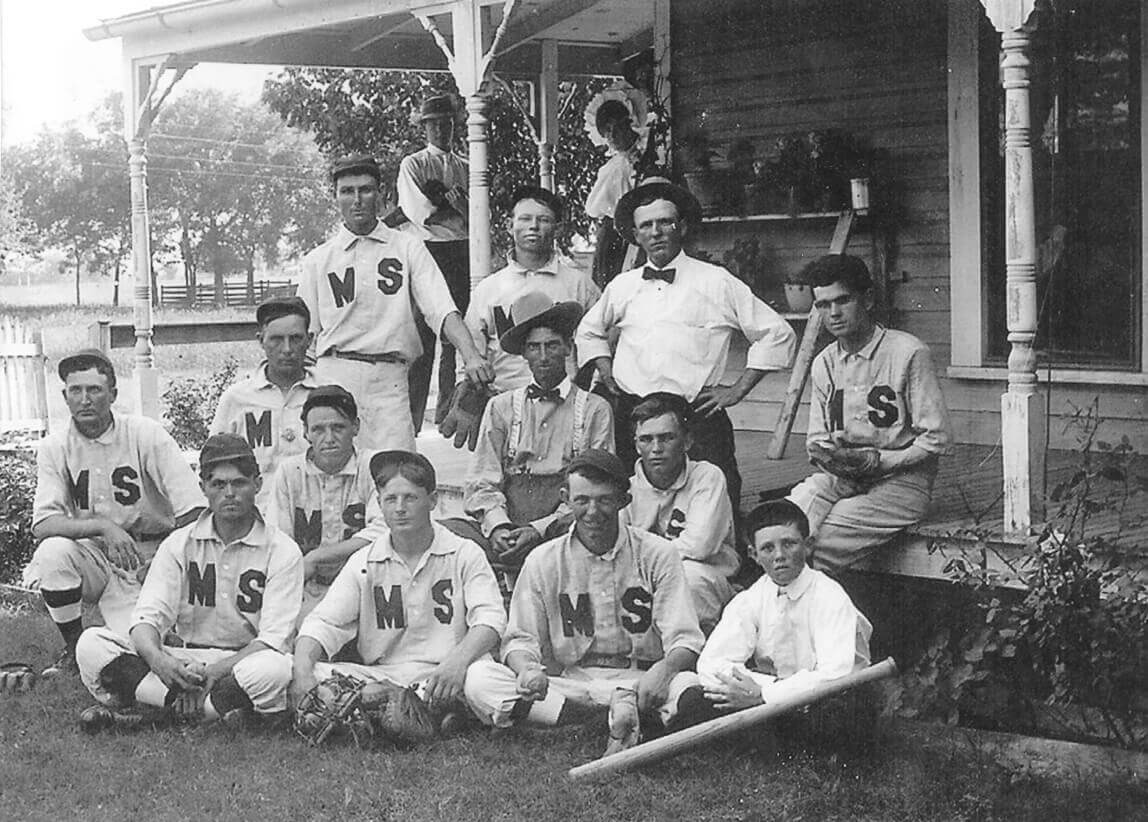
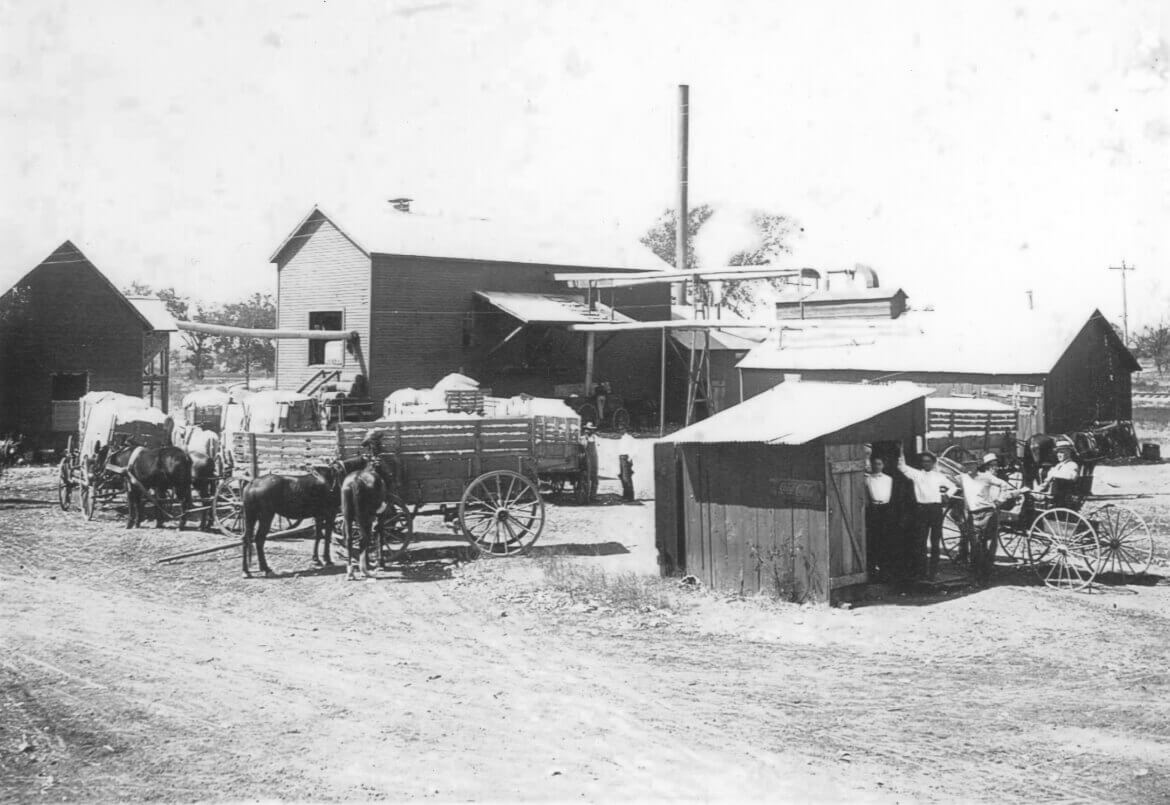
On May 16, 1873 James R. Rogers was appointed to be Melissa’s first Postmaster. In 1886, Melissa had a flour mill, two cotton gins that shipped 3,000 bales of cotton annually and several business houses. It became a stop on the Interurban (The Texas Electric Railway), linking Dallas and Denison in 1908. This transportation network made Melissa a commercial and community center for area farmers. By 1914, its population had reached 400. Unlike many rural communities in Texas, Melissa had electric lights, a telephone exchange, and paved roads before 1920. It also had 5 churches, a large school, and a number of businesses, including a bank.
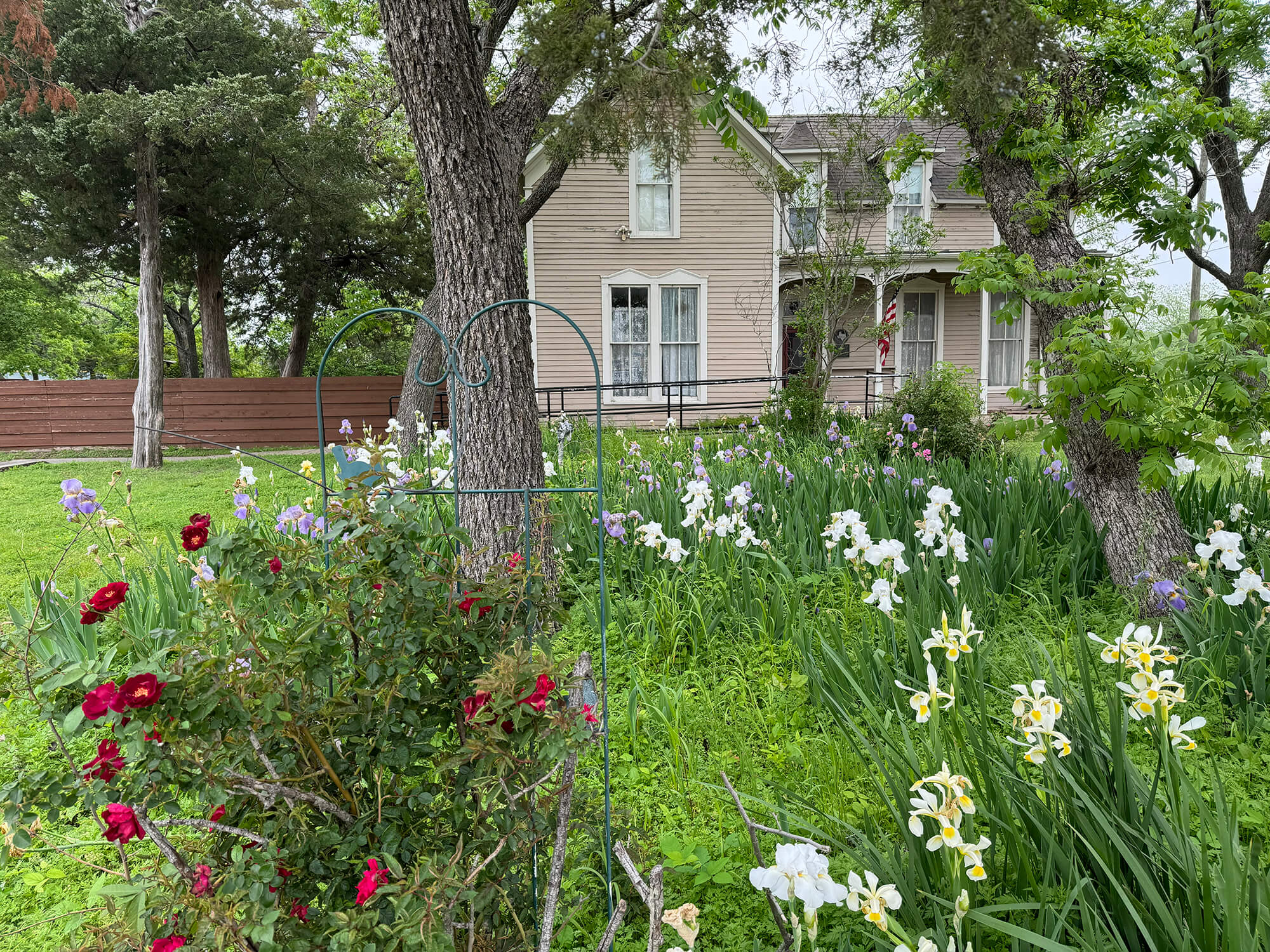
L.A. Scott was an influential and prominent member of the Melissa community in the late 1800s. Scott came from families of early Melissa pioneers who were both families of significant prominence in Melissa, the Scotts and the Sherleys. L.A. Scott himself was a commercial and economic pioneer in Collin County; facilitating transportation, education and finance to the community. Scott spent 25 years as the local agent for the H&TC Railway, as well as a successful merchant in Melissa and an influential and generous member of the Melissa School Board. L.A. Scott’s home is situated near downtown Melissa and was honored with a Recorded Texas Historic Landmark designation by the Texas Historical Commission in 1999, “The Scott-Barker House” RTHL #13770.
Today, the beauty of the Scott-Barker House can be enjoyed alongside its majestic historic landscaping. Amongst the many old growth trees are the historic cedar trees planted by Hugh Barker over 100 years ago. The Barker Family provided the flowers every Sunday for the First Baptist Church of Melissa for many years, harvested from the gardens around their yard. Many of these historic varieties of flowering plants are still thriving at the Scott-Barker House today.
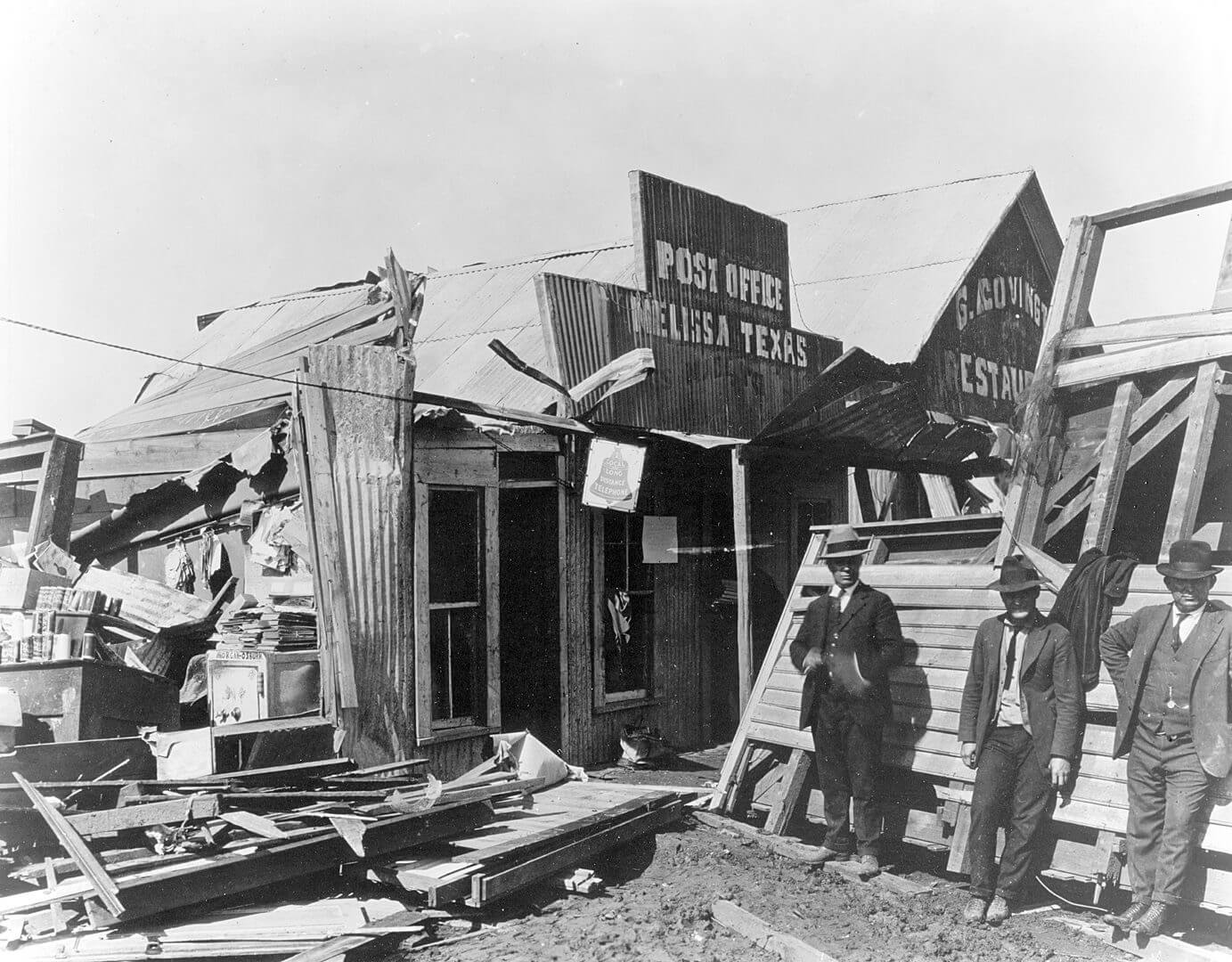
A devastating tornado struck the town on April 13, 1921, killing at least thirteen people, injuring at least fifty four, and demolishing a great number homes and businesses. Eight years later, August 8, 1929, a fire destroyed many of the buildings that had been rebuilt after the tornado.
The Great Depression, the mechanization of farming, and job opportunities in the Dallas metropolitan area after World War II further slowed community growth. The population of Melissa declined from a high of 500 in 1925 to 285 in 1949. Melissa was incorporated in the early 1970s. The population grew to 1,350 by 2000 and to 13,901 by 2020.
Some of the other early pioneers who settled near Melissa were Dr. William Throckmorton, R.E. Moore, G.W. Taylor, T.M. Scott, John and William Fitzhugh, Albert Shirley, Lewis Sherley, James M. Graves, Hogan Witt, John Coffman, Thomas Rattan, Josiah Nichols, Jesse Martin, John M. Nicholson, Lindsey Lewis, J.M. Kincaid, and the Orenduffs.
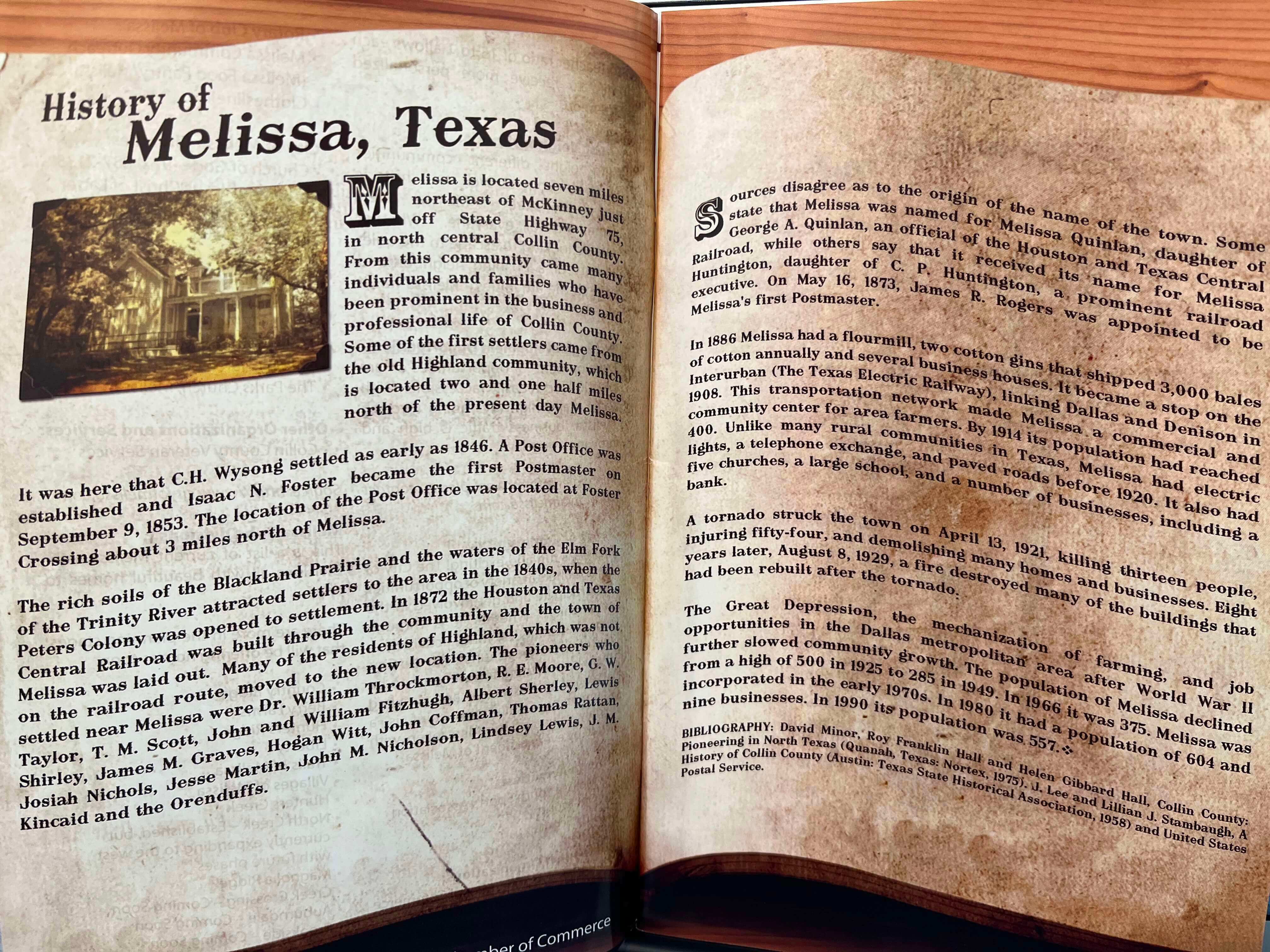
Sources: David Minor, Roy Franklin Hall and Helen Gibbard Hall, Collin County: Pioneering in North Texas (Quanah, Texas: Nortex, 1975). J. Lee and Lillian J. Stambaugh, A History of Collin County (Austin: Texas State Historical Association, 1958), United States Postal Service, United States Census Bureau, Texas Historical Commission, Collin County Historical Commission,
Chester A. Howell, A Town Named Anna, Texas Historical Commission “Scott-Barker House” RTHL Application Packet by Kelly & Johnny Maberry, Personal Interview with Railroad Historian Elden Baker, Personal Interview with Railroad Historian Jim Jake Templin, Personal Interview with Melissa Historian Diane Miller, Melissa Historical Society Presentation by Ulysses Hargett, Historian of the Melissa Masonic Lodge.
Melissa Historical Society was established in 2023 to preserve and celebrate the historic assets of Melissa, Texas. For more information you can follow us on Facebook @melissahistoricalsociety or email us at info@melissahistoricalsociety.org.